
Between heavy snowfall and plummeting temperatures, Iowans spend a lot of time battling ice. While salt is a staple for home safety, over-applying it doesn't just waste money - it's tough on your property and the environment.
Just one teaspoon of salt is enough to pollute five gallons of water to toxic levels. When the spring thaw comes, that salt doesn't just disappear; it flows into your soil and local streams. By using a "less is more" approach, you can protect your home, the environment, and save money.
4 Steps to a Safer, Salt-Smart Property
* Prioritize the Shovel The most effective de-icer is manual labor. By shoveling or snow blowing as soon as the flakes stop falling, you prevent snow from being packed down into ice. If a surface is clear and dry, it needs zero salt
* Master the "Scatter" Pattern
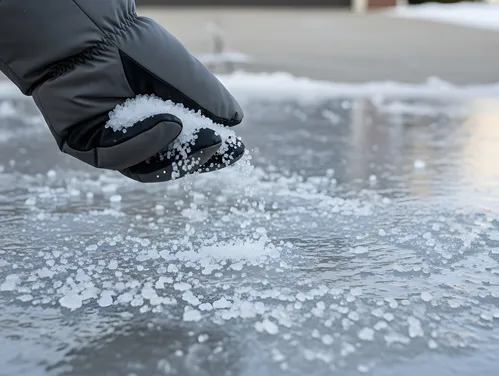
Think of salt as a way to break the bond between ice and pavement, not as a way to melt every inch of snow. Spread grains so there is visible space between them. You want just enough salt to loosen the ice so it can be easily shoveled away.
* Check the Temperature
Standard rock salt (sodium chloride) effectively stops working once the temperature drops below 15°F. Salt is essentially useless and just sits on top of the ice. Switch to sand for immediate traction or a specialized de-icer rated for extreme cold.
Mixing a little salt into your sand can help the sand grains "nestle" into the ice so they don't just blow away.
* The "Post-Storm" Sweep
Once the ice has melted and the pavement is dry, take two minutes to sweep up any leftover salt crystals. Salt left on dry pavement does nothing but wash into the storm drain during the next rain. Collect the excess and put it back in the bag for the next freeze.