
On this page...

Coyote Natural History and Behavior
List items for Coyote Natural History and Behavior
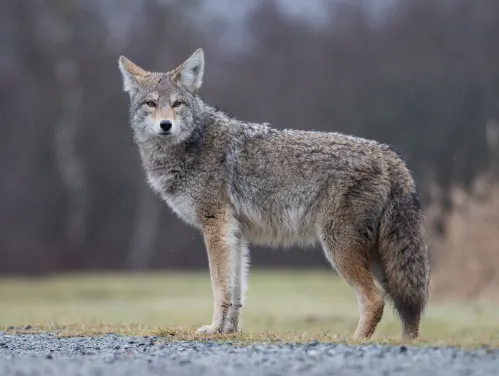
During the 1800s, coyotes were most abundant in the plains and semi-arid areas of the central and western U.S. Coyotes were present in Iowa, but likely not in high numbers.
Large apex predators, such gray wolves, mountain lions, and black bears, were also present and likely kept coyote numbers low naturally. As European settlement advanced westward across the Midwest through the 1800s, most of the large apex predators were eliminated from the landscape due to unregulated killing. From the late 1800s and early 1900s, ranchers raised herds of grazing livestock, mainly cattle and sheep, throughout the Midwest, Plains, and Western Rocky Mountain regions.
During this era, government programs attempted to eliminate coyotes through poison, bounty shooting, and trapping due to conflicts between coyotes, people, and livestock. These efforts temporarily reduced coyote numbers, but unlike other predators which were functionally eradicated during this time, coyotes were extremely resilient and adaptable and their population increased quickly soon after these programs were reduced or eliminated.
In Iowa, coyotes were found statewide during European colonization, but were most common in the open prairies of central and western regions. Like other predators, coyotes were often killed whenever possible. Coyote bounties and circle hunts added further incentive for early Iowans to attempt to eliminate coyotes. Coyote numbers likely reached a low point during the 1920s, but were never fully extirpated like black bears, cougars, and gray wolves.
Coyotes are carnivores, primarily feeding on small mammals, including mice, voles, and rabbits, which comprises up to 90% of their diet. They will also feed on deer and their fawns at certain times of the year.
But coyotes have an omnivorous diet that varies throughout the year, and including fruits, insects, birds, grains, plant matter, or other easy to access food items.
In cities, studies have also found coyotes will scavenge in garbage, eat pet food, or occasionally capture and eat free-roaming cats. Around farms, coyotes may prey on chickens, calves, sheep, or goats. Coyotes will also scavenge wild animals or livestock killed by other means, such as vehicle collisions, hunters, or disease.
The variety of foods coyotes take advantage of throughout the year illustrates their adaptability to living in different types of areas whether it’s urban or rural habitat.
Coyotes are most active at night, especially in cities or other areas where humans are active during the day. In areas with fewer people, coyote activity tends to peak around dawn and dusk. These contrasting patterns demonstrate how coyotes have adapted to live with people.
Coyote social structure revolves around a territorial alpha pair and their offspring that forms a ‘pack.’ The male-female alpha pair participate in defending the territory, establishing a den, and raising the young to maturity. Other coyotes in the social group are subdominant and most often related to (i.e. offspring) the dominant pair.
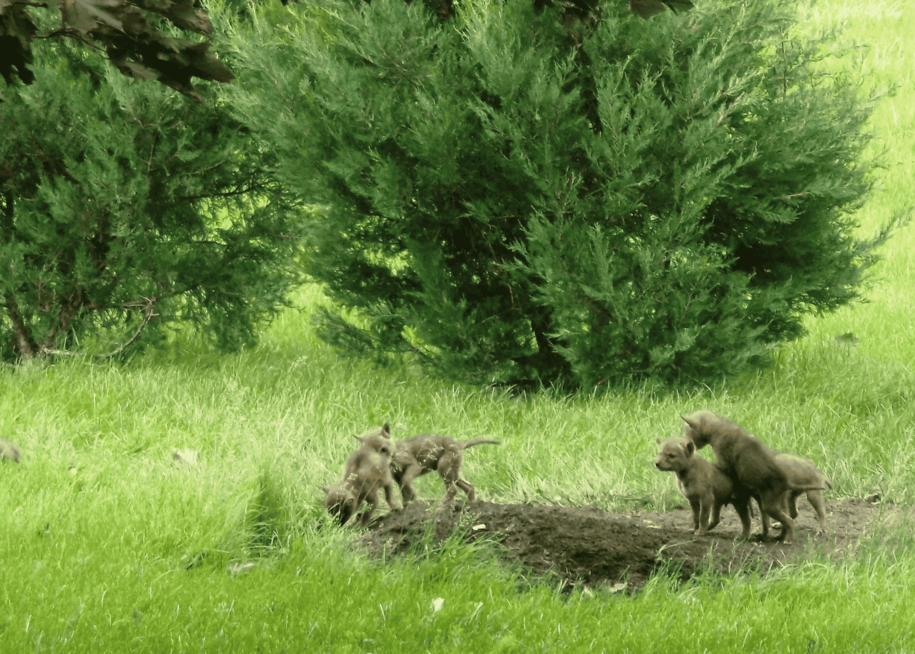
The pair typically has one litter per year with six pups per litter. Born around April or early May, the pups are initially nursed and then fed prey captured by both parents. Around six weeks of age, the pups start leaving the den to feed more on their own.
Non-breeding coyotes are often solitary during summer when food is abundant, then form groups during the winter when food is scarcer. Eventually, young coyotes will disperse to establish new territories or replace their parents when one or both die or can no longer defend their territory.
Coyotes defend their territory through direct interactions with other coyotes, vocalizations, and scent marking. The most commonly observed behavior is vocalizations - high pitched yips, barks, and howls – that announce their presence to other family groups and help strengthen social bonds within their family group. This is commonly at dusk or the first hour of darkness.
This noisy behavior can lead to overestimates of coyote numbers which can add to misconceptions about the risk coyotes pose to humans, pets, game, or livestock.
Another behavior, witnessed often in urban settings with high human traffic areas, is escorting. This behavior comes about as coyotes keep an eye on activity in their territory, especially near active den locations. Coyotes will watch, sometimes sitting in one place or sometimes by following at a distance, to make sure that potential threats to their pack leave the area. This behavior is often confused with stalking but it differs by not being predatory in nature. Careful attention to body language can help tell the difference.
Coyotes are considered a habitat generalist, meaning they can be found almost anywhere. But they are most abundant in landscapes with large natural areas where prey is plentiful and people are relatively rare.
In rural areas, this means coyotes are most abundant in landscapes with interspersed grasslands, pastures, forests, or other natural areas not in row crops. In cities, this means that coyotes are most common around green spaces, including parks, preserves, walking/biking trails, golf courses, river corridors, or neighborhoods with more landscaping or other natural features.
Coyotes have been adapting to urban areas over the past 100 years, but even more so over the past 50 years as urban sprawl extends into what was once wildlife habitat. In today’s world, coyotes often live in urban areas and are seldom seen, but often heard in the evening, in the form of loud vocal yips and howls.
Ecologically, coyotes are at the top of the food chain in Iowa and play an important role as scavengers. Coyotes often provide free rodent control in urban areas by preying upon mice, rabbits, squirrels, groundhogs, and rats. They’ll often readily eat carrion they find such as roadkill or other animals that died from disease. In some way, they can be thought of as a “clean-up crew” in urban areas.
Besides their roles as predator and scavenger, there is inherent value in having coyotes around. Although they may take advantage of food scraps and abundant prey in urban areas, they are still wild and live on their own. While coyotes can become a nuisance in certain situations, many carry out their lives without being seen, adapting to our modern landscape.
Coyotes Today
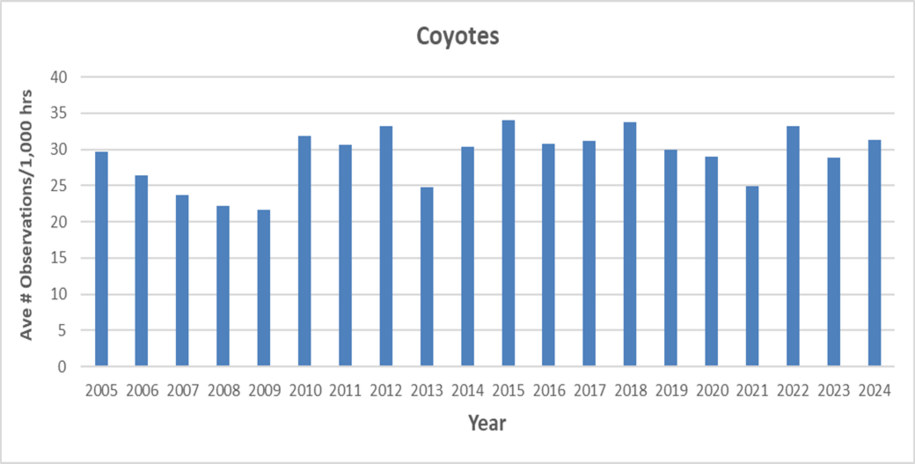
During the 1970s and 1980s, coyotes had become the ‘top dog’ or top predator and their numbers began to rise dramatically throughout Iowa. Coyotes had been hunted and trapped since the 1930s, and harvest records indicate the population has increased across the state.
Coyotes have displayed remarkable resilience and intelligence by adapting to a growing human population, including to living in modern urban areas successfully.
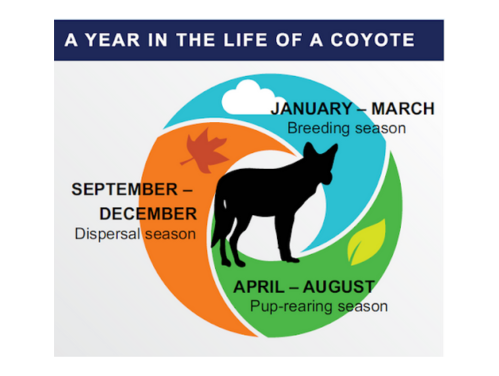
Back to topA Year in the Life of a Coyote
- Breeding season: January - March
- Pup rearing season: April - August
- Dispersal season: September – December
Changes in the Coyote Population… Are Urban Coyotes a New Thing?
Prior to European settlement during the 1800s, coyotes were most abundant in the plains and semi-arid areas of the central and western U.S. Aggressive poisoning, bounty shooting, and trapping programs were launched in these regions of the U.S. during the early to mid-1900s by our federal government in an attempt to eliminate the coyote due to livestock depredation concerns. These programs were carried out for at least 3 decades and temporarily reduced their numbers, however coyotes were found to be extremely resilient and adaptable. Their population quickly increased soon after the funding for these programs were reduced or eliminated.
In Iowa, coyotes were found throughout most of the state during European settlement, but were most common in the open prairies of central and western Iowa. Like other predator species, coyotes were killed whenever possible by settlers. Interesting historical accounts of coyote bounties and circle hunts added further incentive for early Iowans to attempt to eliminate coyotes in Iowa. It is believed their numbers reached a low point during the 1920s, but were never fully extirpated like other species such as black bears, cougars, and gray wolves had been.
During the 1970s and 1980s, surveys and research showed that coyote numbers rose dramatically throughout Iowa. Because gray wolves were extirpated from Iowa, coyotes became the ‘top dog’ or top predator in Iowa. Annual coyote harvest numbers from regulated hunting and trapping have been documented in Iowa from 1930 to our present day. These harvest records also show the dramatic increase in the coyote population.
Whether loved or hated, over time, coyotes have displayed remarkable resiliency and intelligence in adapting to a growing human population. That’s why, in today’s modern world, we are now seeing some coyotes even adapt to living in urban areas successfully.
Back to top5 At-Home Coyote Basics
- Never Approach Coyotes - Coyotes are wild animals: give them space! Remove anything that might attract a coyote to your home. If you see a sick or injured coyote, call the DNR or local authorities to help.
- Keep Your Pets Safe - Supervise your pets when they are outside. If coyotes are known to be in the area, check the area for coyotes first and keep pets on a leash. Do not leave pet food out.
- Remove Food Attractants - Never Feed Coyotes. Feeding coyotes or allowing them access to food teaches them to approach homes and people. This includes pet food, fallen fruit from trees, grills, compost, and spilt bird feed. Do NOT feed coyotes.
- Scare Coyotes Away - Remind coyotes that we are scary. When coyotes are too close to people, make loud noises, shout, make yourself look big, and throw things at them until they leave.
- Alert Neighbors to Coyote Activity - Hear or see coyotes near your neighborhood? Tell neighbors and share information on how to avoid coyote conflicts. If concerning behavior is observed, alert your city.
5 At-Home Coyote Basics, printable factsheet (845.16 KB) .pdf
Back to topHuman-Coyote Conflict
Despite instinctual curiosities, coyotes tend to be shy around humans or other potential threats. This avoidance is a natural dynamic that should be encouraged. Reducing the number of interactions between people, livestock, and their pets with coyotes is the first step to avoiding conflict.
Proper responses to conflict will reinforce the preferred dynamic between people and coyotes. While sightings are to be expected, the below tactics should help avoid negative encounters.
The next sections will focus on things that anyone can do to reduce human-coyote interactions: reducing close contact with coyotes and training coyotes to remain wild through aversive conditioning.
Removing coyotes that are not causing issues may be inviting in others that exhibit different behaviors or boldness when the territory is no longer defended. Additionally, light to moderate removal efforts may have the opposite effect by actually increasing coyote numbers. Compensatory reproduction is an adaptation that coyotes have where, with some lethal pressure, coyote reproductive systems increase output. This, coupled with changes to the pack structure from lethal removal, may have lasting repercussions.
Reduce Close Contact with Coyotes
Recognizing that coyotes are utilizing the urban environment and will continue to do so, does not limit the ability to reduce close contact with coyotes. By limiting easy access to food items, practicing simple steps to maintain pet safety, and using barriers to separate pets from coyotes, a healthy long-distance relationship can be maintained.
Keep Coyotes Wild
Actions that build on coyotes’ natural fear of humans will help reduce negative interactions.
Coyotes naturally maintain a distance from people and by employing hazing and scare tactics, their wariness and fear of people will be reinforced. Hazing through scare tactics and sensory discomfort creates an uncomfortable atmosphere, decreases close coyote activity, human-coyote interactions, and conflict.
Hazing activities are easy to incorporate with other actions and can be shared between neighbors for whenever coyotes are encountered. Use the fear of people to your advantage to make humans seem less friendly overall.
Direct Removal Options
Direct removal of coyotes should be considered as a tool only for the correct situations after other strategies have been put into place. The goal is to avoid creating more problems in the future.
Coyotes keep coyotes in check, and removing animals that are not causing problems will leave a void for others to move in. It could also lead to higher reproduction rates and to young coyotes learning on their own instead of following the lead of an adult coyote that is behaving.
Direct removal of specific coyotes is recommended when coyotes are too habituated to people or are displaying aggressive behaviors, attack pets or livestock, or bite a person. The urban nature of cities may limit the options for lethal removal. Check local ordinances for limitations to trapping or discharging firearms.
Statewide, as regulated by the Iowa DNR, coyote hunting is open year-round allowing the use of firearms. Additionally, there is a trapping season in the fall and winter. Toxicants or poisons are not supported nor advised by the Iowa DNR. Relocation of coyotes is not recommended nor is it supported by the Iowa DNR.
Back to topResources for Cities
Cities are encouraged to plan for interactions between people and wildlife including coyotes. Developing an urban coyote management plan will help prepare city staff with information to better respond if calls about coyotes come in and share information to city residents.
Actions that cities should be prepared to take include
- Make signs that can be put up in parks where coyote activity is reported
- Design handouts that let residents know what actions they can take
- Decide on one point of contact for coyote calls within the city such as the Police Department or Parks and Rec Department
- Track calls detailing events that occur, location, and date
- Learn from other successful plans in Iowa
**Link for Urbandale’s coyote page: https://www.urbandale.org/1032/Coyotes
Contact Urban Wildlife Biologist Andy Kellner [email protected] 515.975.8318
Back to top