
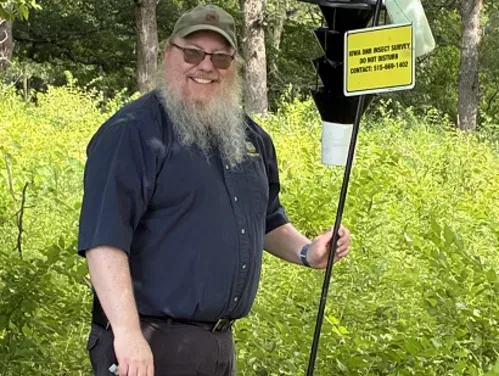
Meet DNR Forest Health Program Leader, Tivon Feeley
Tivon is the Forest Health Program Leader for the Iowa DNR. His work focuses on protecting Iowa's forests and community trees from insects, diseases, invasive species, and environmental stressors. Forest health work is a lot like ecological detective work: when trees begin to decline, the cause is not always obvious, and scientists must look for clues in the leaves, bark, roots, insects, weather patterns, site history, maps, and lab results.
Tivon earned a B.S. in Forestry, with an emphasis in Forestry Management and a minor in Forest Genetics, and an M.S. in Forestry, with an emphasis in Forest Pest Management, from Iowa State University. After completing his B.S., he served as a city forester intern in New York City. He then worked as a diagnostician in the Iowa State University Plant Disease Clinic and spent eight years as a forestry extension specialist. In 2008, he joined the Iowa DNR as the Forest Health Program Leader.
Data Set, Graph, Learning Tools
The Iowa DNR Forest Health Lab helps support trees across the state by identifying insects, evaluating tree disease samples, and connecting field observations with diagnostic evidence.
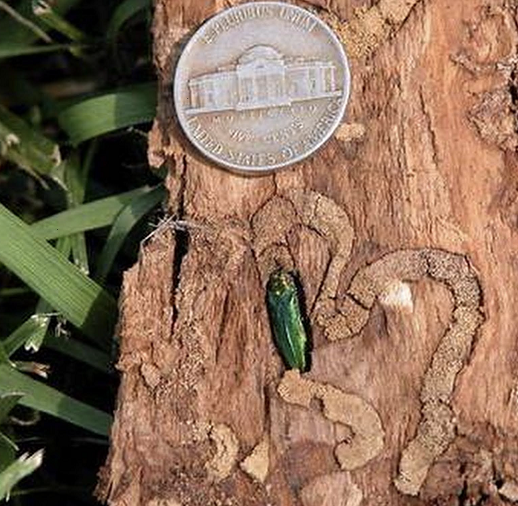
Examples of current forest health work include emerald ash borer, oak wilt, spongy moth, Asian longhorned beetle monitoring, thousand cankers disease, bur oak blight, Armillaria root disease, invasive plants, spotted lanternfly monitoring, white oak mortality, drought-related stress, and bark and ambrosia beetles associated with declining trees.
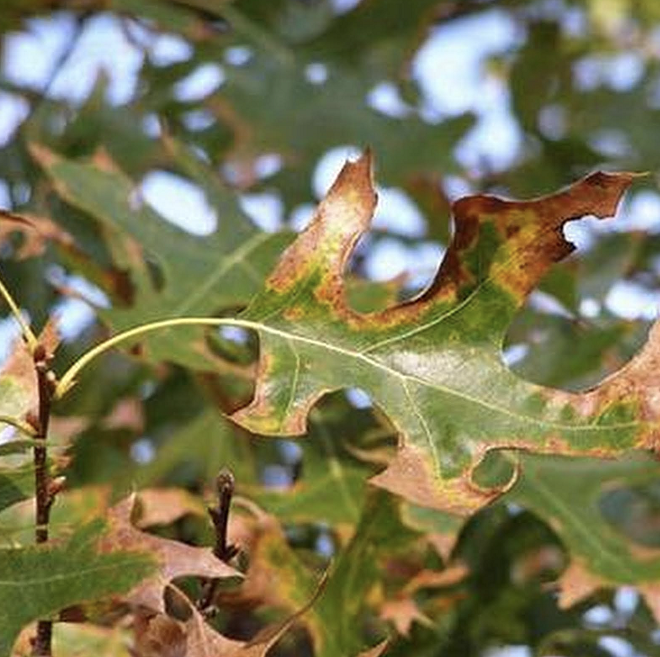
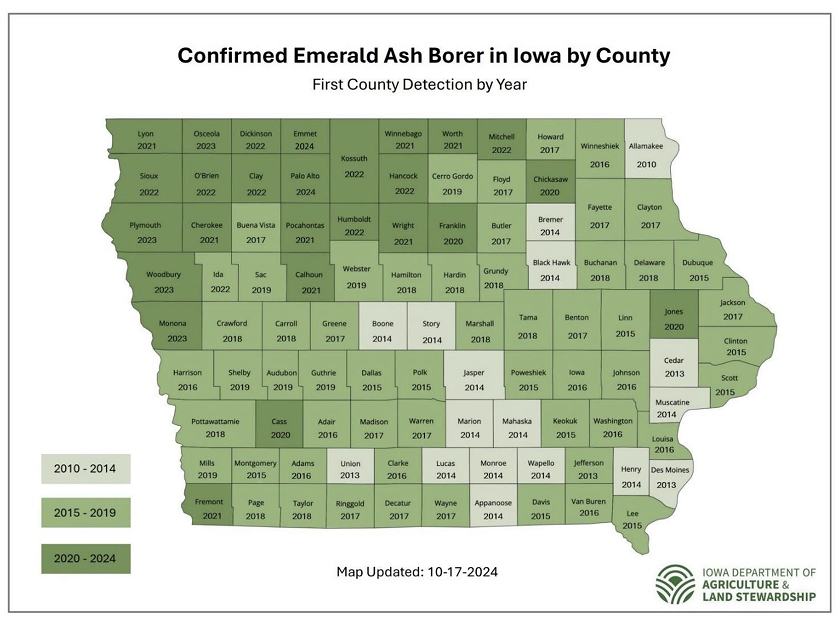
Question for students to explore: Why are some trees declining while nearby trees remain healthy? Students can examine photos of tree symptoms, insect galleries, trap data, maps, and lab results to think like forest health scientists. They can ask whether insects are causing tree decline, responding to trees that are already stressed, or acting together with drought, disease, site conditions, and other stressors.
Learn More
For more information or questions, please contact [email protected]