
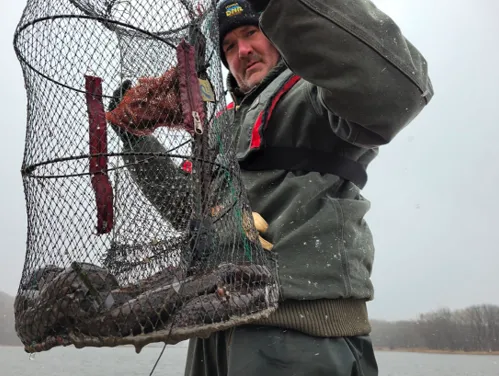
Meet DNR Wildlife Research Technician, Paul Frese
Paul is a Wildlife Research Technician for the Iowa DNR Wildlife Bureau. He works with a variety of wildlife species through the Multiple Species Inventory and Monitoring Program with a focus on amphibians and reptiles. He graduated from Northwest Missouri State University with a BS in Wildlife Ecology and Conservation then Missouri State University with a MS in Biology. While in graduate school, he studied lesser siren and hellbenders, which are aquatic salamanders that unfortunately don't live in Iowa. He grew up in Bridgewater and now lives near Boone.
Data Set, Graph, Learning Tools
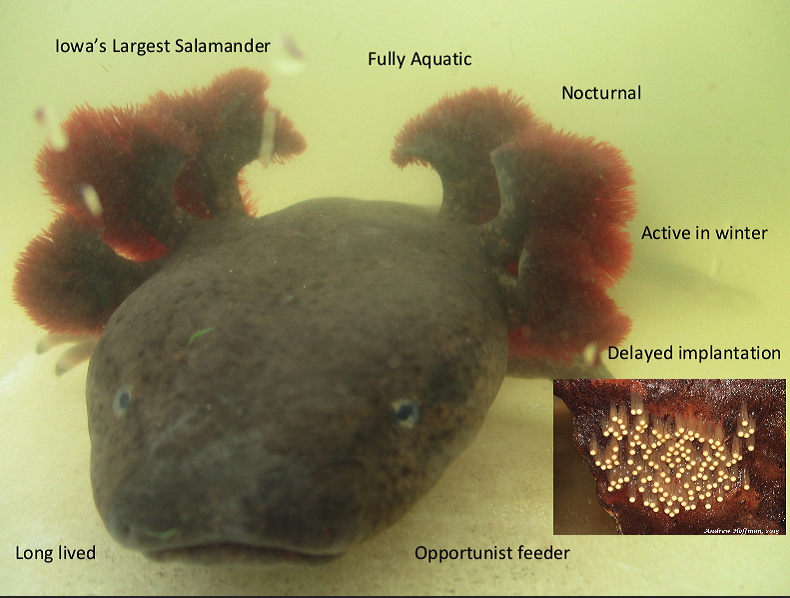
Mudpuppy (Necturus maculosus) salamanders prefer medium to large rivers and lakes. They are found in permanent water bodies at least three feet deep in Iowa. They prefer to live on the floor of its aquatic habitat under sunken logs or rocks.
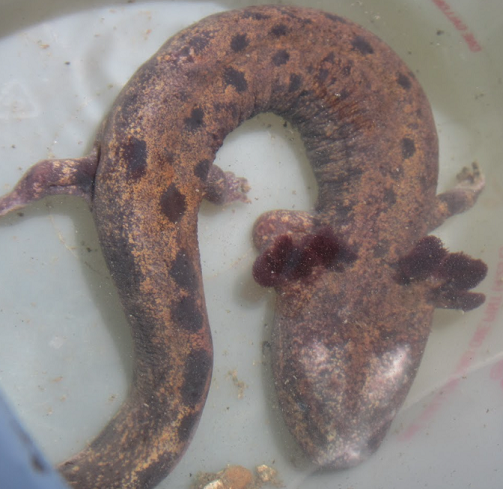
Their population is threatened by poor water quality due to sedimentation and certain chemicals. Mudpuppies are threatened in Iowa and should be released if caught. They play an important role as they are the only known host for the salamander mussel.
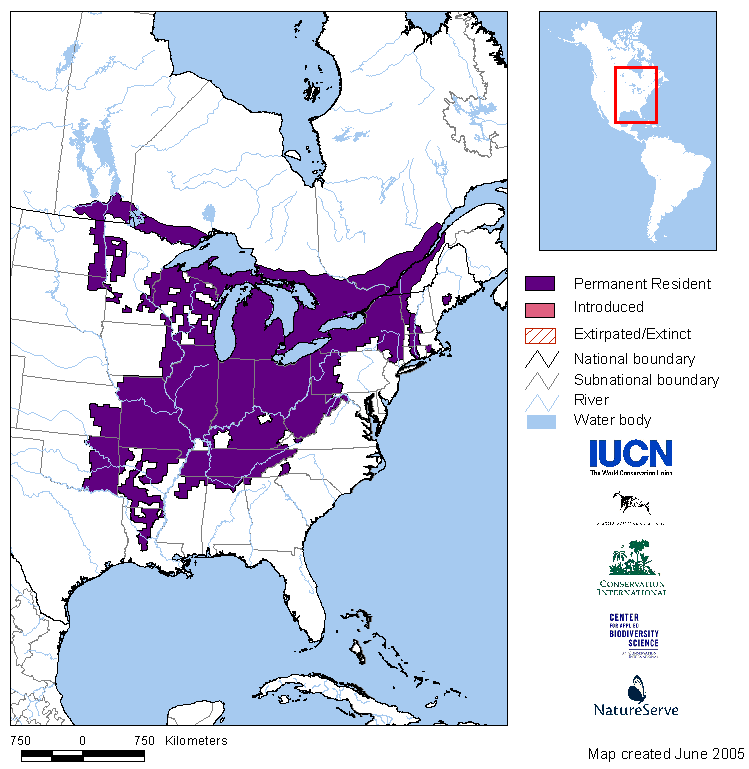
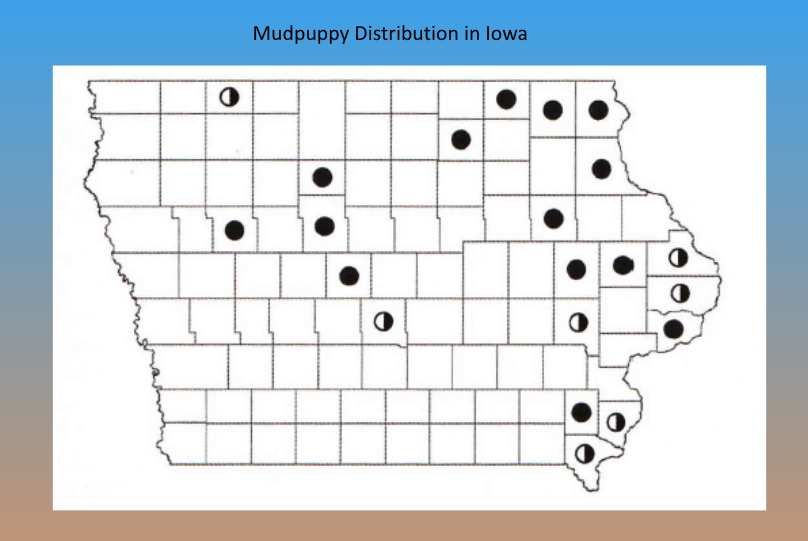
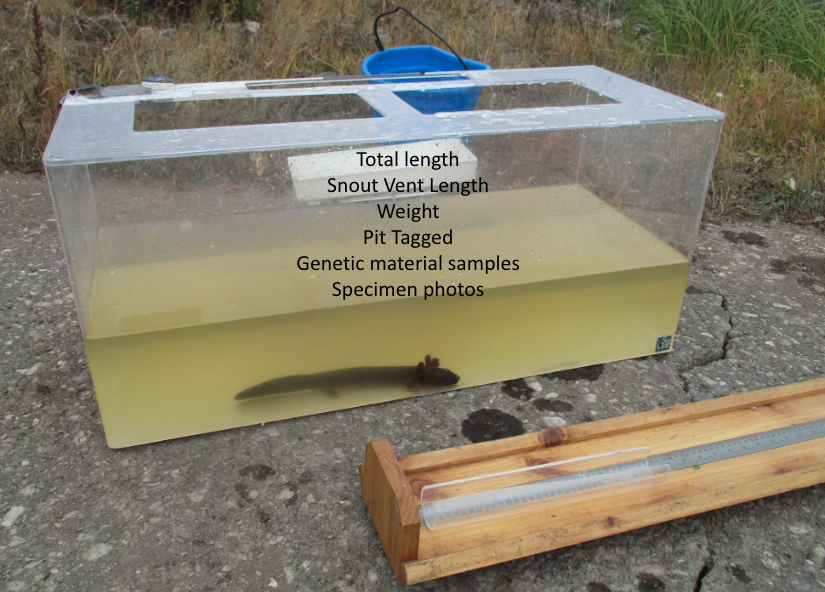
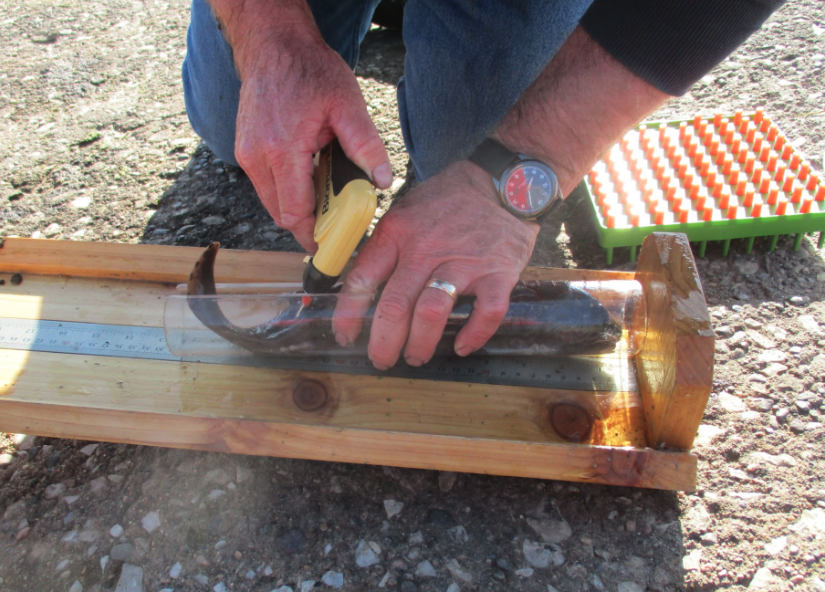
The DNR wildlife research teams seek to better understand mudpuppy distribution through trapping and tagging efforts and hope to continue to work with partners to improve habitat and water quality for this awesome Iowa species.
Learn More
For more information or questions, please contact [email protected]