
Meet DNR Environmental Specialist Senior, Dennis Thielen
Dennis is an Environmental Specialist Senior with the DNR Field Services and Compliance Bureau. Growing up on a dairy farm in eastern Iowa, he got his BS degree from University of Dubuque. Dennis has been with the DNR since 1997.
Dennis conducts compliance inspections at Animal Feeding Operations (AFO), sites that have DNR issued General Permit No 2 (GP2) for stormwater discharge associated with construction activities, and cities issued Municipal Separate Storm Sewer System (MS4) permits. DNR Field Office staff conduct complaint investigations, emergency response and other on-site visits needed by the DNR Environmental Services Division.
Data Set, Graph, Learning Tools
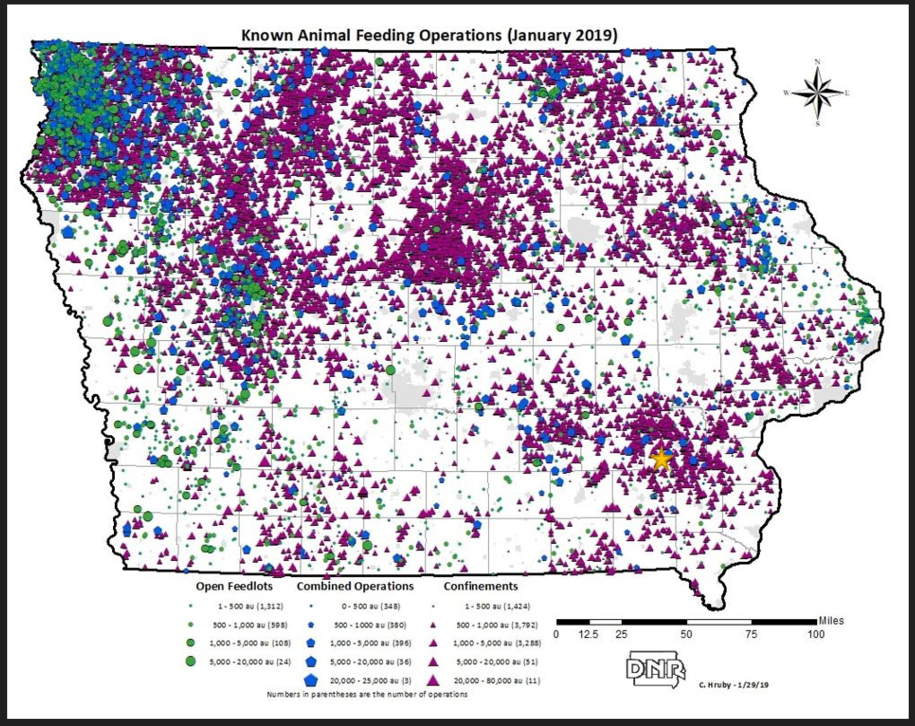
DNR Field Services staff regularly inspect sites to help protect Iowa’s water and environment. At animal feeding operations (AFOs), inspectors check manure storage structures, feed areas, and locations where dead animals are stored or composted to ensure they’re not harming nearby water sources.
For larger farms, staff also review required Manure Management Plans (MMPs). These plans help determine how much manure can safely be applied to fields by factoring in soil conditions, crop types, and the nutrients in the manure. The goal is to prevent over-application of nutrients and protect our rivers, lakes, and drinking water.
Inspectors also visit construction sites that disturb more than one acre of land. These sites must follow rules under a permit called General Permit #2 (GP2), which requires a plan to prevent stormwater runoff and keep sediment from washing into streams and lakes.
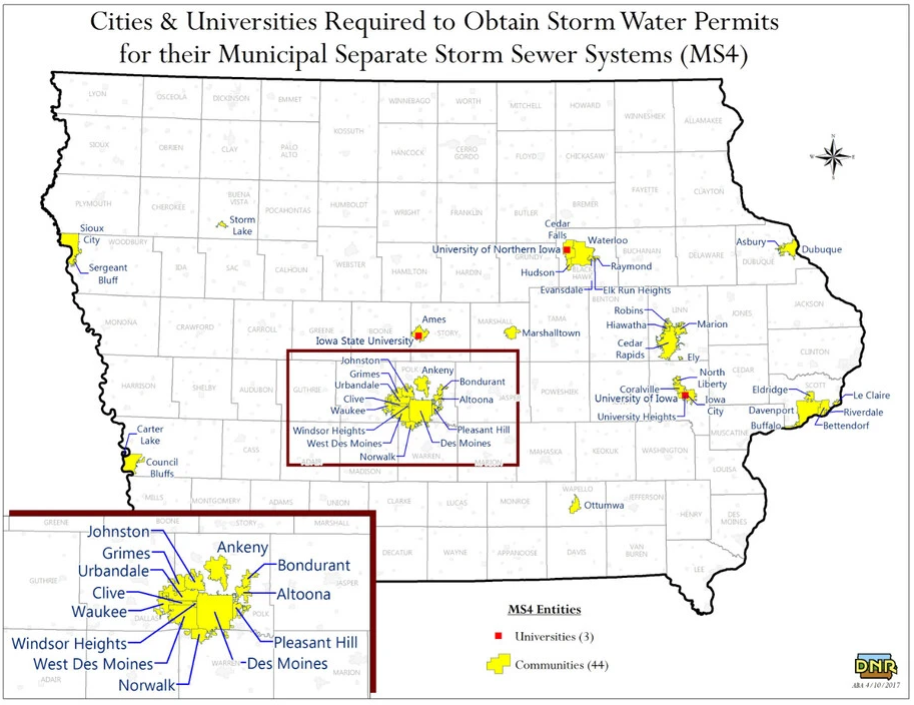
In addition, cities and universities with storm sewer systems must follow a permit called MS4. An MS4 is a system of storm drains, pipes, and ditches used by cities, towns, or universities to collect and carry rainwater (stormwater) away from streets, parking lots, and other surfaces. This permit helps reduce pollution from stormwater by requiring education programs, community involvement, and proper management of runoff from city streets, buildings, and construction sites. Cities must also work to find and eliminate illegal discharges—such as waste or chemicals—into storm drains, and train their staff to protect water quality. Unlike wastewater, this stormwater does not go to a treatment plant—it flows directly into local rivers, lakes, or streams.
Learn More
For more information or questions, please contact [email protected]