
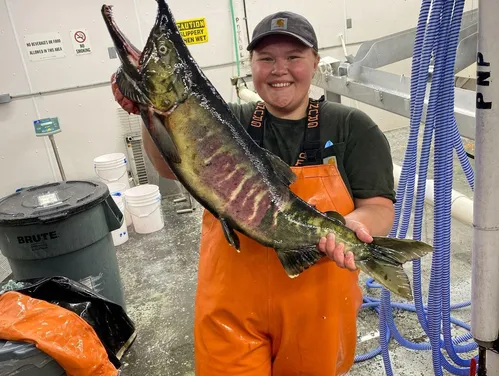
Meet Annika Roisen - Fish Hatchery Biologist
Annika manages Iowa DNR’s Rathbun Fish Hatchery, the largest hatchery in Iowa, and one of the largest Walleye hatcheries in the nation. This hatchery regularly produces and distributes six species of fish across Iowa, including Walleye, Muskellunge, Paddlefish, Channel Catfish, Bluegill and Largemouth Bass.
She earned a B.S. in Fisheries and Water Resources with a focus in Aquaculture from the University of Wisconsin- Stevens Point. Annika has worked for the Iowa DNR for two years. Prior to managing Rathbun Fish Hatchery, she worked on the Iowa DNR Fish Culture Research Team, improving fish culture techniques for the hatchery system. She has dedicated her career to culturing fish for sportfish restoration and conducting research on revolutionary aquaculture practices.
Data Set, Graph, Learning Tools
Walleye spawn, like any fish spawning, is incredibly laborious and time consuming. To produce Walleye at Rathbun Hatchery, the Iowa DNR collects spawning male and female fish from Rathbun Lake using gillnets.
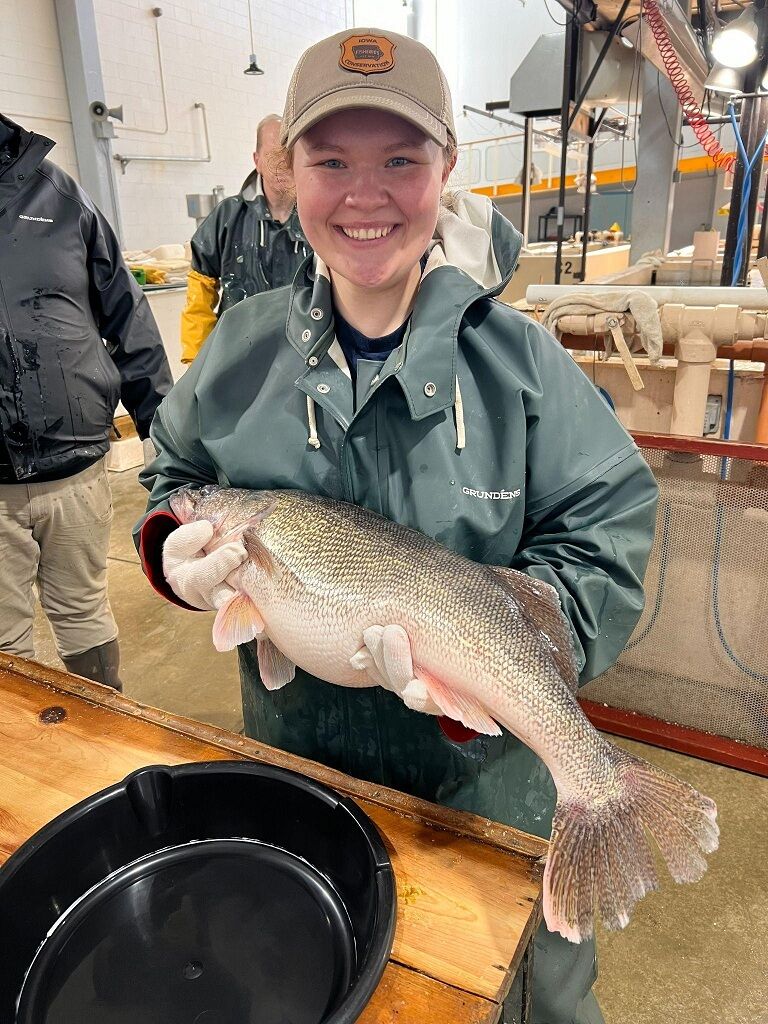
Once the fish are brought into the hatchery from the lake, hatchery staff will check the ripeness of the females by gently squeezing the fish to see if eggs will easily flow. When ripe, they will lightly squeeze the eggs into a pan for fertilization. Staff mix in milt, collected from the males at an earlier time, and water. Water opens the fertilization window within the egg for approximately three minutes, allowing the semen to fertilize the eggs while gently agitating the pan.
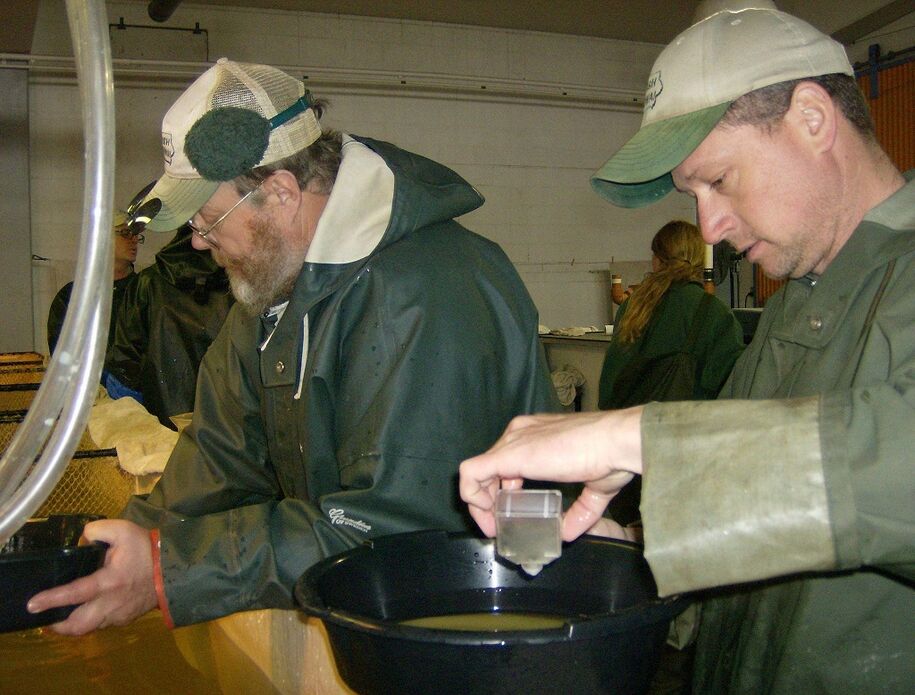
Once the fertilization window is closed, staff “mud” the eggs. Pouring the eggs into a pan, with a specialty mud solution, decreases the adhesiveness of the eggs. Fish eggs can be tacky; this is to adhere the eggs to rocks and plants in a lake.
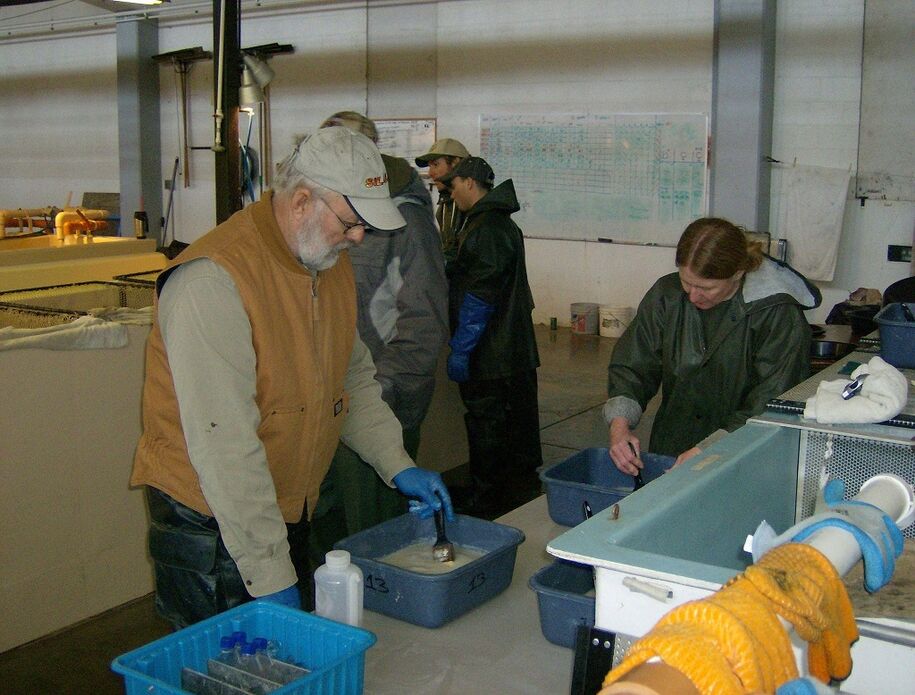
After “mudding,” staff place the eggs into a mesh tray in fresh flowing water for four hours. These four hours are called “water hardening,” and this will significantly expand the size of the egg by absorbing water. Water hardening increases the rigidity of the eggs, allowing for the eggs to take mild damage without impacting the development of the embryo.
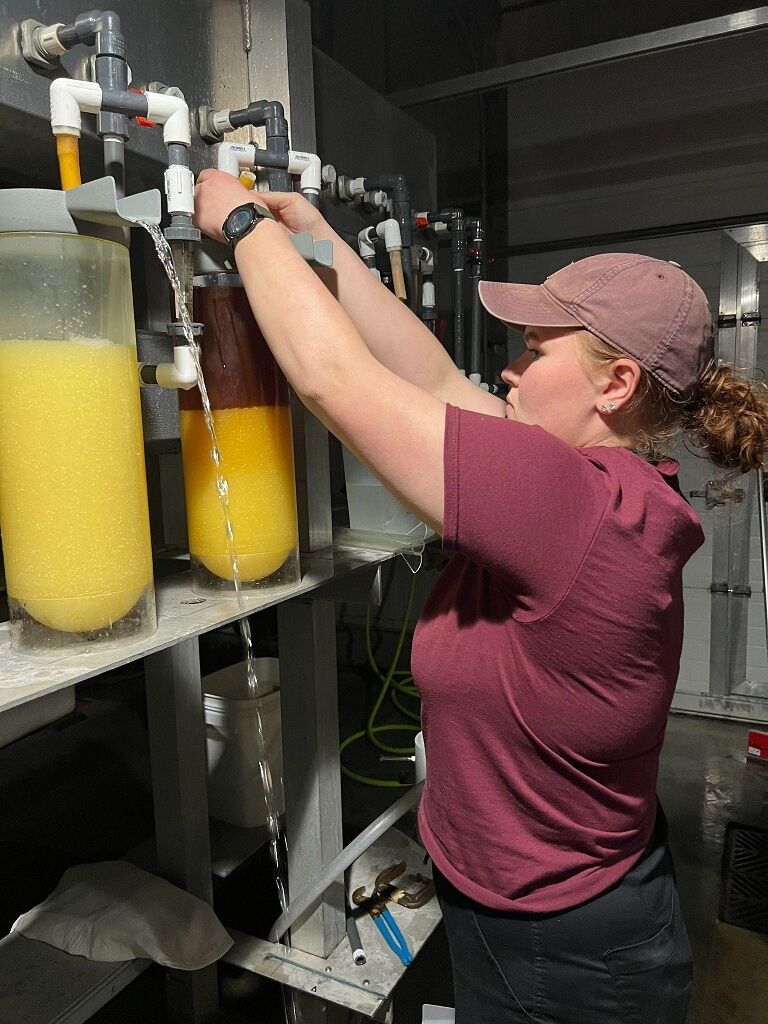
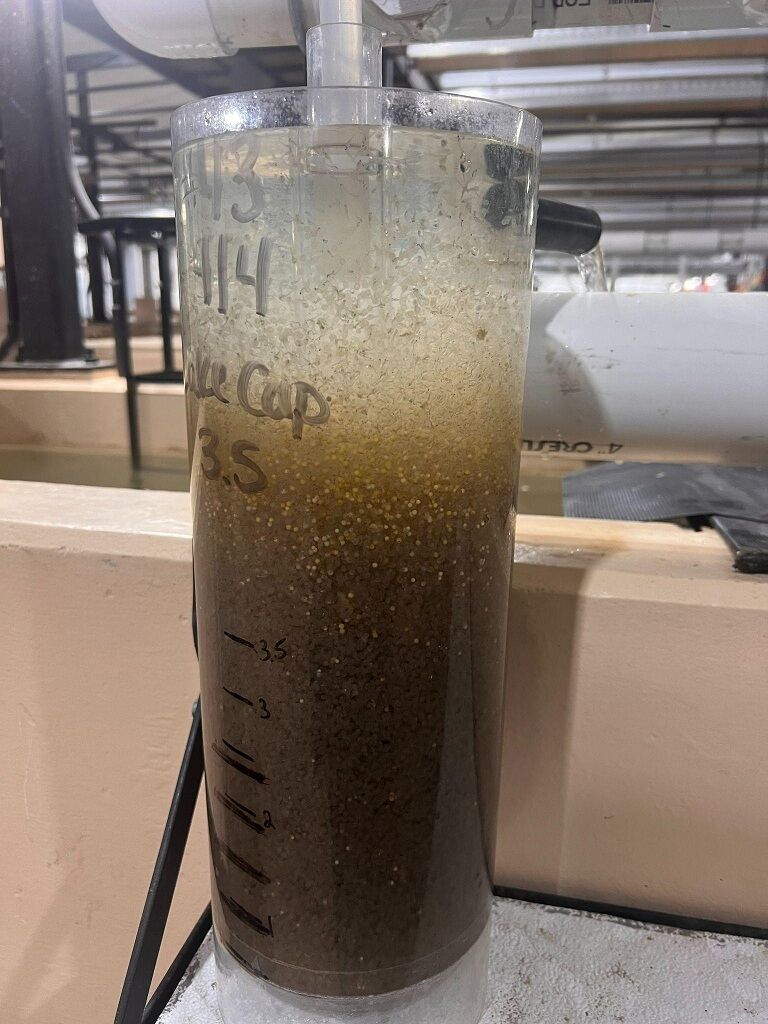
Once this process is completed, Walleye eggs will roll around in an incubator with fresh flowing water for approximately two weeks prior to hatching. When the eggs hatch, fry will be produced. Fry are the beginning larval stages of development of a fish, with Walleye being 8-9 mm long at this stage.
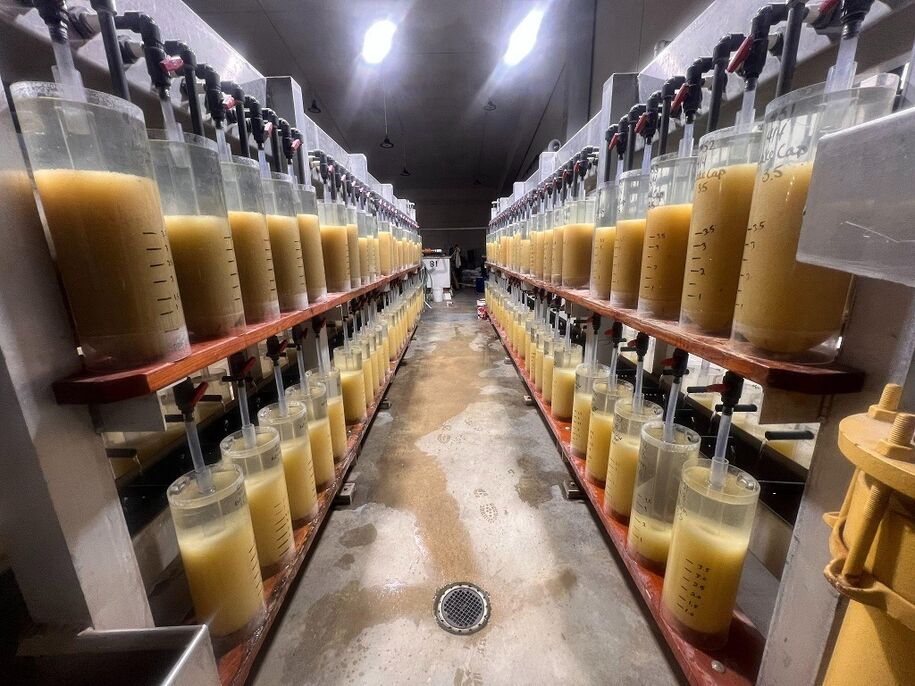
In 2025, Rathbun Fish Hatchery stocked 67.4 million Walleye fry within the state of Iowa. The hatchery retained 662,500 fry to grow into a larger size to stock in May as fingerlings and October/November as advanced fingerlings.
Learn More
For more information or questions, please contact [email protected]