
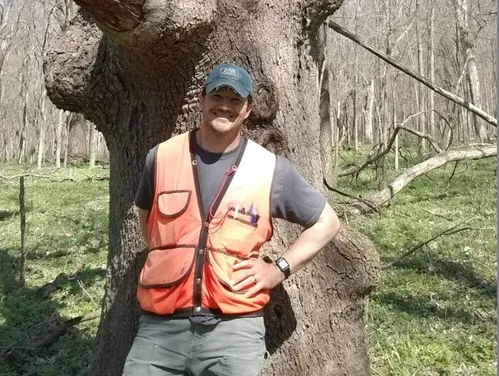
Meet Joe Herring - DNR District Forester
Joe works with an array of private landowners, farmers, county conservation staff, non-profit organizations, urban communities, and other partners to expand and take care of Iowa's forests and trees. He became interested in forestry by spending time outdoors, cutting and selling firewood in high school, and through FFA and biology classes.
During college, Joe interned with the DNR in northern Minnesota and spent a summer inventorying forests in the Boundary Waters Wilderness Area. He received a B.S. in Forest Ecosystem Management and a M.S. in Environmental Science from Iowa State University. Before becoming a Forester 16 years ago, he also worked in the Watershed Improvement Section of the Iowa DNR.
Data Set, Graph, Learning Tools
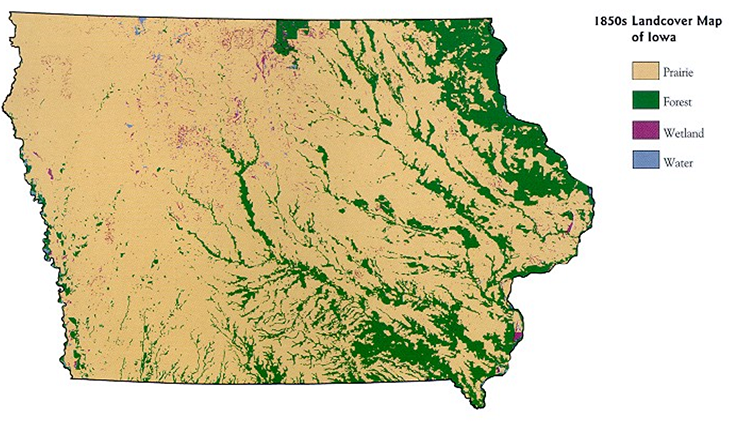
The above map shows the Iowa landscape in the 1850s, with 6-8 million acres of forests.
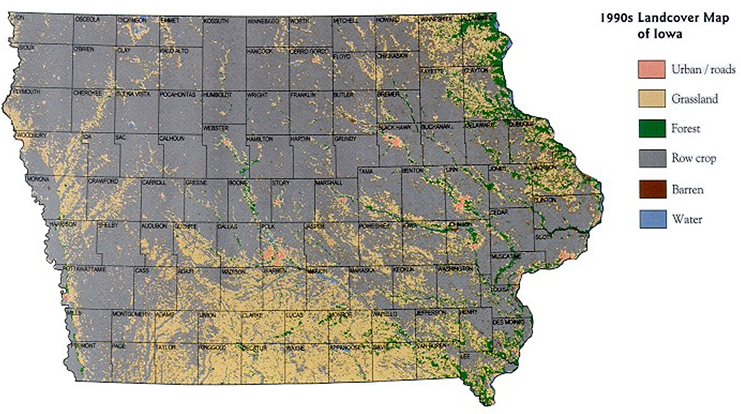
The above map shows the modern landscape of Iowa, with 2-3 million acres of forests. Many of today's forests are in a deteriorated condition due to prior harvests that removed the best trees, overgrazing, insect pests, disease, non-native invasive plants and neglect.
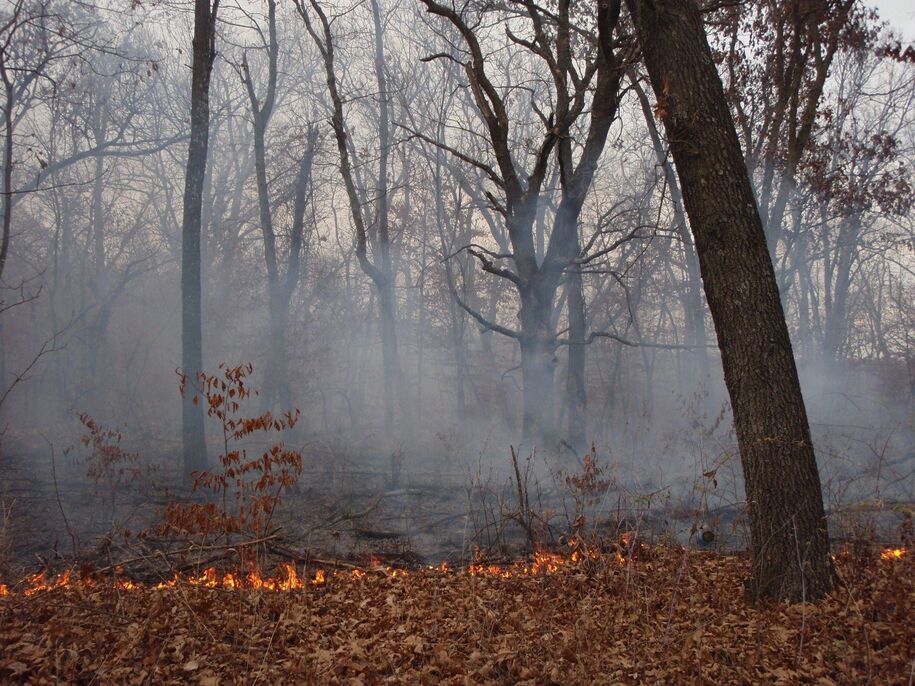
Prescribed burning can help maintain oak woodlands and savannas in certain forest types. Without attention and maintenance, our oak woodlands are growing old and declining.
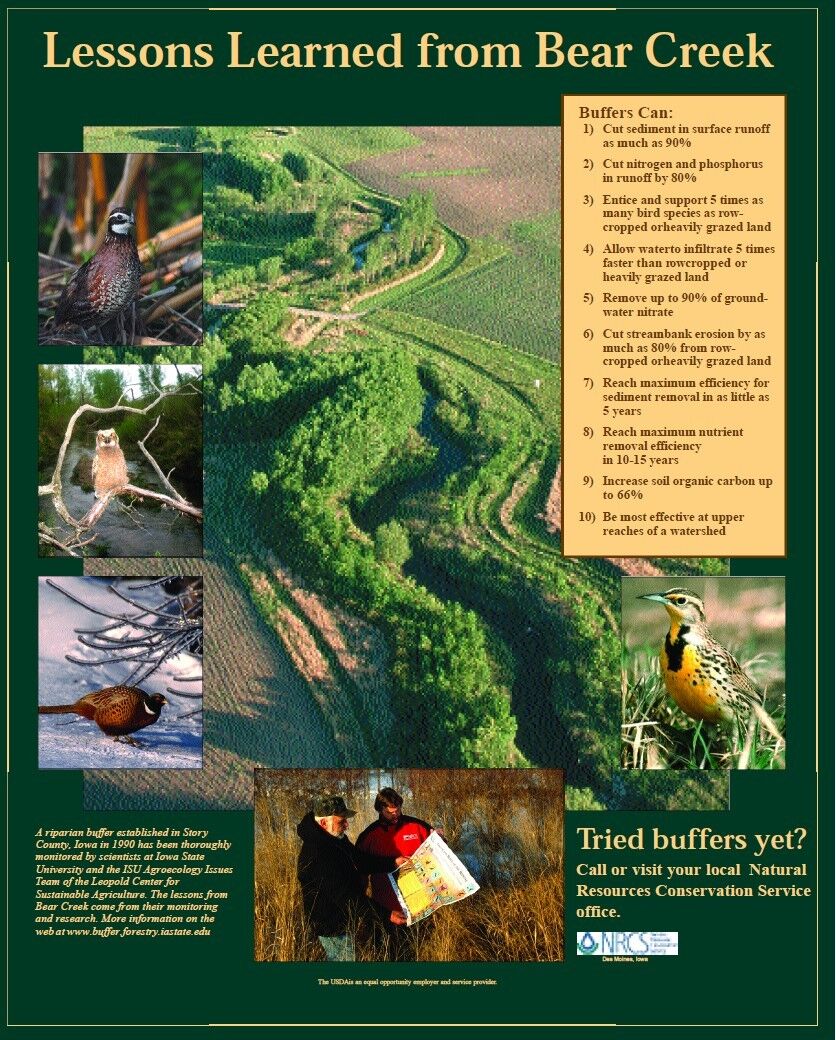
The poster above shows the Bear Creek Riparian Forest Buffer demonstration site in Story County near Roland. Riparian Forest Buffers are dedicated areas along streams and rivers that are restored by planting native trees and shrubs to protect the streambanks and sensitive watershed zones from overgrazing, farm tillage, compaction, incoming surface runoff, pesticides, manure and fertilizers. Not only do forest buffers help improve water quality and aquatic life, they also create wildlife habitat for pheasants, mammals, pollinators, and many other types of wildlife – supporting as much as five times more songbirds than alternative land uses.
Learn More
For more information or questions, please contact [email protected]