
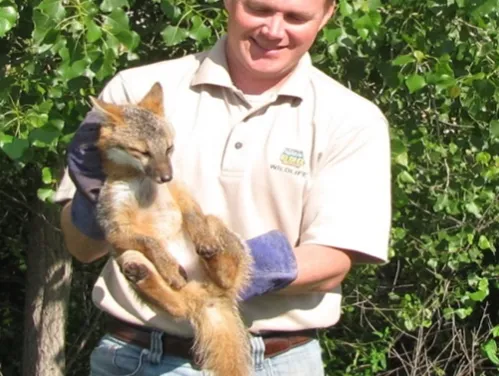
Meet DNR Wildlife Biometrician, Tyler Harms and Furbearer and Wetlands Biologist Vince Evelsizer
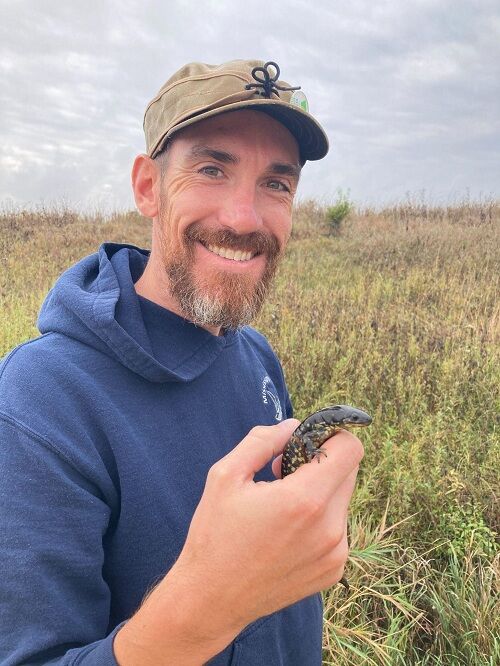
Tyler is the Wildlife Biometrician for the Iowa DNR. He is responsible for coordinating wildlife harvest and population surveys conducted by the DNR, conducting research to address Wildlife Bureau priorities, and providing technical guidance on wildlife research and population modeling to wildlife research staff. Tyler received a B.S. in Animal Ecology, an M.S. in Wildlife Ecology, and a Ph.D. in Wildlife Ecology and Statistics, all from Iowa State University. One of the coolest aspects of his job is that he works with a variety of wildlife including bobcats, trumpeter swans, secretive marsh birds, and Monarch butterflies. His favorite Iowa wildlife species is the trumpeter swan.
Vince received a B.S. in Wildlife from the University of Wisconsin—Stevens Point, as well as a M.S. in Wildlife Sciences from Clarion University of PA. As the furbearer program leader, Vince oversees the management and research of furbearers in Iowa. Some of his primary responsibilities include oversight of furbearer population trends, annually reviewing and recommending changes to furbearer regulations, as well as developing new research projects. Other highlights of the job include sharing mammal information with fellow DNR staff and the importance of good habitat on Iowa’s landscape for our wildlife and water quality to the public.
Data Set, Graph, Learning Tools
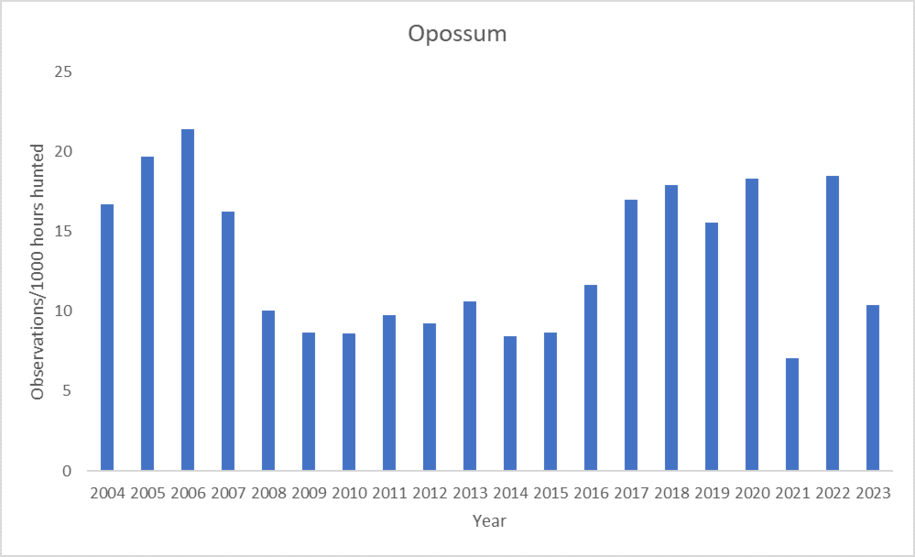
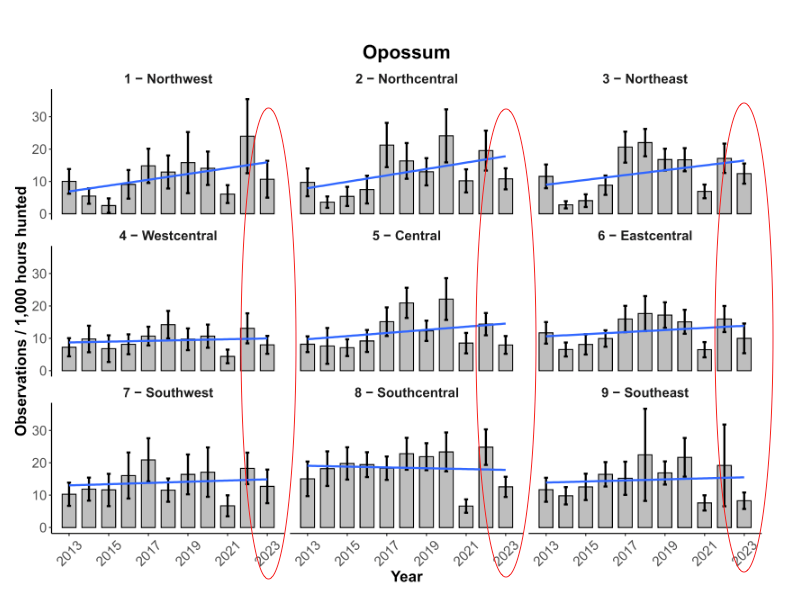
Are Opossum (grinners) population trends affected by annual winter severity?
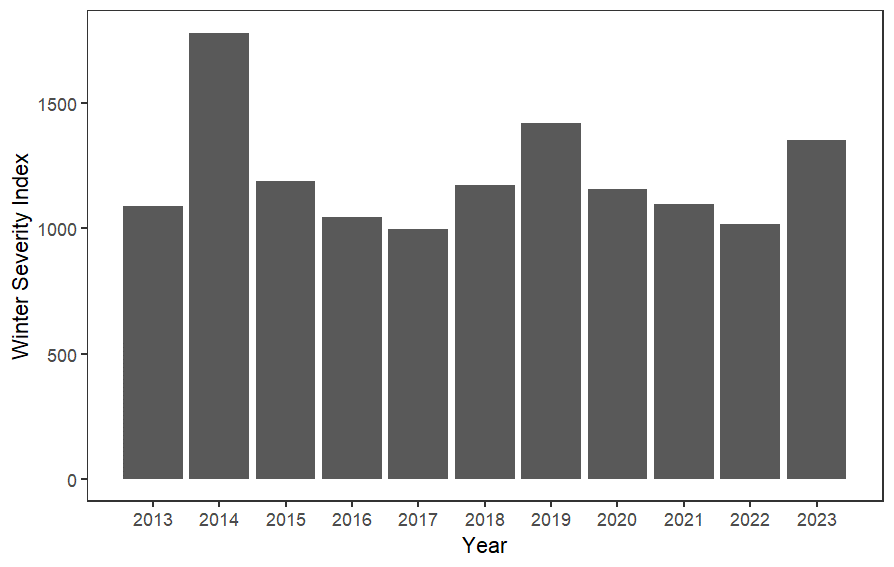
Annual Winter Severity is an index based on daily scores for snow depth, snowfall, and temperature. Winter severity can vary significantly in Iowa from north to south.
Bowhunter Observation Survey
Each year, the Iowa DNR solicits responses from bowhunters as part of the Bowhunter Observation Survey conducted from 1 October to 6 December. The primary objectives of this survey are to 1) collect observations of white-tailed deer which serve as an independent index of regional deer populations across Iowa, 2) supplement other deer data collected by the DNR, and 3) collect observations of other select species (turkeys and furbearers) to monitor their long-term population trends.
Bowhunters record information during every hunting trip they take. The recorded information includes date, county in which they hunted, total hours spent hunting, and the total number of individuals of white-tailed deer, wild turkey, and 10 different furbearer species. The observations collected by bowhunters are summarized as the number of observations per 1,000 hours hunted, which accounts for differences in critter observations due to the amount of time hunters are in the field. About 2,000 bow hunters record 75,000 observation hours on average each year.
Learn More
For more information or questions, please contact [email protected]